

How to Stop Foundation Looking Cakey: The 2026 Guide to a Flawless Base
Cakey foundation isn't a product failure; it's a failure of skin-prep chemistry and application volume. We've all experienced that frustrating moment when a carefully applied look turns into a thick mask that settles into fine lines and clings to dry patches by lunchtime. It's a waste of good product and a total confidence killer. You deserve a base that looks as vibrant at 5 PM as it did when you first stepped out the door.
The good news is that mastering how to stop foundation looking cakey is easier than you think. With the global skincare market hitting 172.54 billion dollars in 2026, the real secret lies in the "skinification" of your daily routine. This guide reveals the professional secrets to achieving a smooth, second-skin finish that lasts all day without clumping or settling. You'll learn how to pair high-street favorites like L'Oreal and Maybelline with the right prep steps for a natural, glowing result. We're diving into the power of serum-infused primers and the soft, diffused application techniques that define this year's biggest beauty trends.
Key Takeaways
- Understand the "Formula Friction" rule to ensure your primer and foundation work together instead of clashing on your skin.
- Master the "Dot and Buff" method to learn exactly how to stop foundation looking cakey while achieving a perfectly even distribution.
- Switch to a center-outward application technique to prevent heavy product buildup and avoid the dreaded "mask" effect.
- Perfect the "Setting Mist Sandwich" to lock your base in place for a hydrated, second-skin finish that lasts all day.
The Science of Cakey Makeup: Why Foundations Clash with Your Skin
Cakey makeup happens when your base refuses to melt into your skin. Instead of a seamless, glowing finish, the product sits on the surface, looking thick, dry, and clumpy. This usually occurs because of a chemical mismatch or poor surface texture. Understanding the formulation of Foundation (cosmetics) is the first step to fixing the problem. When products don't bond with your skin, they eventually separate, creating that dreaded "mask" effect that highlights every fine line.
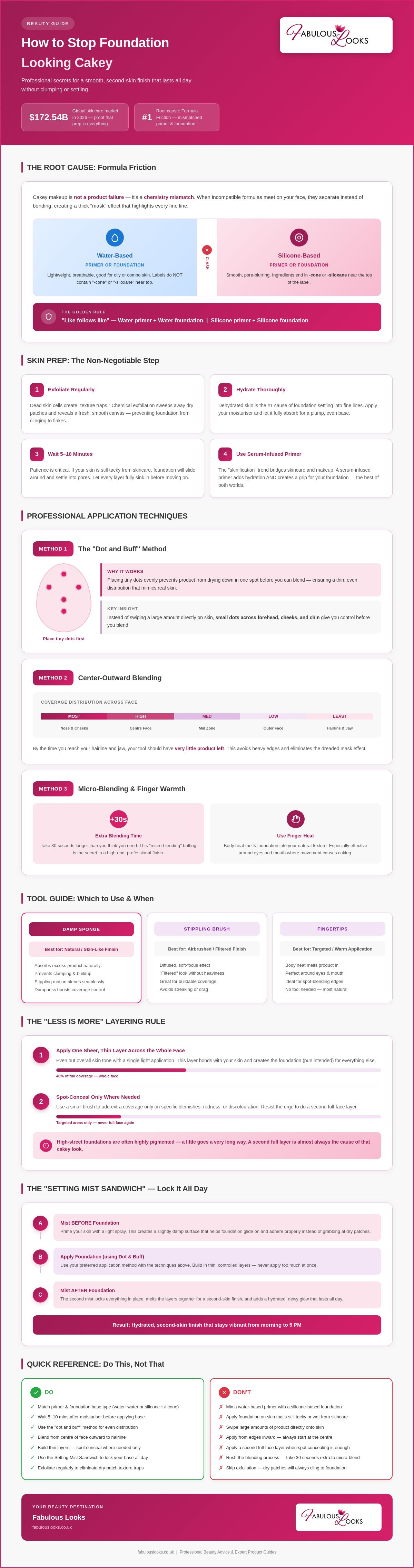
The 'Formula Friction' rule is often the primary culprit. If you've wondered how to stop foundation looking cakey, start by checking your ingredient labels. Many people unknowingly mix a water-based primer with a silicone-based foundation. These two don't play well together. The silicone essentially "floats" on the water, leading to pilling and sliding. It's like trying to mix oil and water on your face; they'll never truly blend into a second-skin finish.
Ingredient Compatibility: Water vs Silicone
Check your labels for ingredients ending in -cone or -siloxane. If these appear near the top of the list, you're using a silicone-heavy product. To keep things smooth, remember that like should always follow like. Use a silicone primer with a silicone foundation, or pair water with water. This prevents the products from rejecting each other. Mastering how to stop foundation looking cakey requires this bit of label-reading savvy to ensure your products work in harmony.
Skin Prep: The Non-Negotiable Foundation of a Flawless Base
Dead skin cells and dehydration create "texture traps" that ruin even the best application. When foundation hits a dry patch, it clings and highlights every flake. Regular chemical exfoliation is essential to sweep away these obstacles and reveal a fresh canvas. Before you even touch your makeup, your skin needs to be hydrated and smooth. You can explore professional-grade options in our skin collection to find the perfect prep essentials for your routine.
Patience is just as vital as the products you use. Give your moisturizer at least 5-10 minutes to fully sink in. If the surface is still wet or tacky from skincare, your foundation will slide around and settle into pores. Application volume matters too. Smothering your face in one thick layer is a recipe for disaster. It's much better to build thin, sheer layers only where you need them. This technique ensures the product bonds with your skin rather than just stacking on top of it.
Professional Application Techniques for a Seamless Finish
The way you apply your base is just as critical as the formula you choose. To master how to stop foundation looking cakey, start with the 'Dot and Buff' method. Instead of swiping a large amount of product directly onto your skin, place tiny dots of foundation evenly across your forehead, cheeks, and chin. This prevents the product from drying down in one spot before you can blend it out. It ensures a thin, even distribution that mimics the look of real skin.
Always start your blending from the center of your face and work outwards. Most of us need the most coverage around the nose and cheeks where redness occurs. By the time you reach your hairline and jaw, your brush or sponge should have very little product left on it. This avoids heavy edges and the dreaded "mask" effect. Implementing these professional application techniques ensures that your base moves with your face instead of sitting on top of it.
Don't rush the process; micro-blending is the secret to a high-end finish. Take 30 seconds longer than you think you need to buff the product into your skin. For areas that tend to look dry, use the warmth of your fingers. The heat from your skin helps melt the foundation, allowing it to fuse with your natural texture. This is especially effective around the eyes and mouth where movement is constant.
The 'Less is More' Rule of Layering
- Step 1: Apply a sheer, thin layer across the entire face to even out your skin tone.
- Step 2: Use a small brush to spot-conceal only the specific areas that need extra coverage.
High-street foundations are often highly pigmented and require very little product to achieve a perfected look. Knowing how to stop foundation looking cakey often comes down to resisting the urge to add a second full layer.
Choosing Your Tools: Sponge vs Brush vs Fingers
Your tool choice depends on your desired finish. A damp beauty sponge is a lifesaver because it naturally soaks up any excess product that could lead to clumping. However, if you want a "filtered" look without the weight, a stippling brush provides a soft, airbrushed effect. Find your next holy grail in our Face Collection for professional-grade results at high-street prices.
How to Fix and Prevent Cakey Makeup Throughout the Day
Prevention starts before you even step out the door. Try the "Setting Mist Sandwich" to maximize adhesion. Spritz your face after your primer but before your foundation to create a tacky, receptive base. Once your makeup is done, spray again to lock everything together. This technique fuses the layers into one flexible film. Many people make the mistake of powdering their entire face; don't do it. Apply powder only to your T-zone. This keeps your cheeks looking hydrated and prevents the product from drying out and cracking in areas with less oil.
You need to identify what you're fighting to fix it properly. Breakdown happens when your natural oils melt the product, while cakiness occurs when there's too much pigment or a lack of moisture. If your skin is just shiny, use blotting papers. They lift the oil without shifting the pigment underneath. If the product looks thick and textured, you've found the secret of how to stop foundation looking cakey: you need moisture, not more coverage.
The 3-Step Emergency Mid-Day Rescue
- Step 1: Spritz your face with a hydrating mist to "melt" and soften any dry, crusty edges.
- Step 2: Press a clean, damp sponge over the area. Don't rub; just press to redistribute the existing product into a thinner layer.
- Step 3: Lightly dust with a translucent powder only where absolutely necessary to stop unwanted shine.
Long-Term Prevention: Building a Non-Cakey Kit
Choosing the right formula is half the battle. If you're a beginner, "Radiant" or "Sheer" finishes are much safer than "Full Matte" options. These formulas are more forgiving and move naturally with your expressions. You can find incredible deals on these high-performance staples in our Sale Collection. For more expert advice on picking the right products, check out our Branded Makeup UK guide. It's your ultimate roadmap to high-street beauty that delivers professional results every time.
Ready for Your Most Radiant Base Yet?
Achieving a second-skin finish is all about the chemistry between your products and your skin. You've learned that matching your primer to your foundation and mastering the center-outward application are the real keys to success. By embracing the "less is more" rule and using mid-day hydration rescues, you'll never have to worry about how to stop foundation looking cakey again. It's time to put these professional techniques to work with high-performance products that actually deliver on their promises.
Ready to upgrade your routine? You can Shop Genuine High-Street Foundations and Face Products at Fabulous Looks today. We are proud to offer 100% genuine branded cosmetics at affordable high-street prices, ensuring you get professional results every morning. With our fast UK delivery, you'll be ready to debut your new, seamless look in no time.
Go ahead and experiment with your application with total confidence. Your perfect, glowing base is finally within reach!
Frequently Asked Questions
Why does my foundation look cakey as soon as I put it on?
Immediate cakiness is usually caused by applying too much product in a single layer or using a primer that clashes with your foundation's base. If you've mixed a water-based primer with a silicone foundation, the products will sit on top of each other instead of blending. Stick to thin, sheer layers and ensure your formulas are compatible for a seamless start.
How do I stop my makeup from looking dry and patchy?
Dryness and patchiness often stem from a lack of skin prep or choosing a formula that is too matte for your skin type. Use a hydrating serum or moisturizer and let it sink in for at least five minutes before application. Switching to a radiant finish foundation can also help the product glide over texture instead of clinging to it.
Can I fix cakey foundation without taking it all off?
You can definitely rescue your look by using a hydrating mist and a clean, damp sponge. Spritz your face to "reactivate" the product and then gently press the sponge over the textured areas to lift excess pigment. This is one of the fastest ways to master how to stop foundation looking cakey when you are on the go.
Is it my foundation or my skin that's the problem?
It's usually a combination, but skin texture is often the primary culprit. Foundation is designed to even out skin tone, not fill in texture or dry patches. If your skin is dehydrated or has a buildup of dead cells, even the most expensive foundation will look heavy. Focus on consistent exfoliation and hydration to create a smooth canvas.
Does setting spray help with cakey makeup?
Setting spray is a vital tool because it helps "melt" your makeup layers together into one cohesive film. Using a mist before and after your base provides extra grip and prevents the product from settling into fine lines. It's a professional secret for anyone learning how to stop foundation looking cakey while ensuring it lasts all day.
What is the best tool to apply foundation for a natural look?
A damp beauty sponge is the gold standard for a natural, second-skin finish. The moisture in the sponge prevents it from soaking up too much product while helping to sheer out the foundation as you blend. If you want more coverage, use a stippling brush first and finish by pressing the skin with your warm fingertips to melt everything together.